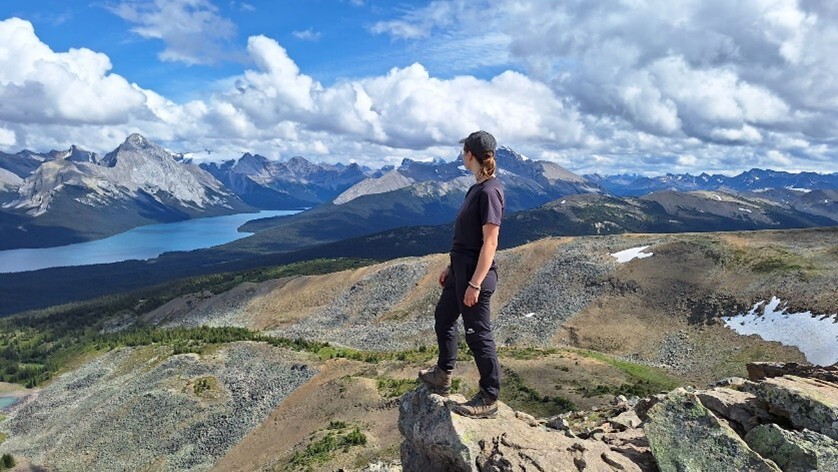
“If it’s black, fight back. If it’s brown, lie down. If it’s white, goodnight.” I made sure to memorize this saying about bear encounters before boarding my flight to Canada. After all, the odds of meeting a bear in the wild aren’t exactly low. During my six months there, I ended up seeing eight of them – some only a few meters away on the trail. In moments like that, you really want to know how to react. Luckily, all of my encounters were peaceful, and I never had to use my bear spray. Still, they definitely got my adrenaline pumping!
Adventures like these set the tone for what turned out to be an unforgettable stay in Canada: I’m Emily, a student assistant at Biomol, and I spent six months living in Vancouver – the country’s third-largest city. During that time, I completed a research internship in Dr. Anna Blakney’s lab at the University of British Columbia. This experience not only offered exciting insights into RNA research but also showed me how valuable international collaboration and intercultural exchange can be, how much being active in nature benefits both body and mind – and how small one can feel in a country as vast as Canada.

Van, Raincouver, City of Glass, Hollywood North – A City with Many Nicknames
Vancouver, affectionately called “Van” by the locals, is located on Canada’s west coast in the province of British Columbia and, with around 2.6 million people in the Metro Vancouver area, forms the largest metropolitan region in Western Canada [1]. It was my first time living in a major North American city – and the towering glass facades of downtown, which earned Vancouver the nickname “City of Glass,” immediately left an impression on me (Fig. 1). Despite its urban vibe, the city feels surprisingly green: the ocean on one side, mountains on the other, and countless parks and coastal pathways in between. This unique setting turns Vancouver into a paradise for outdoor enthusiasts – along the beaches, joggers, beach volleyball players, and cyclists can be found enjoying the outdoors year-round.
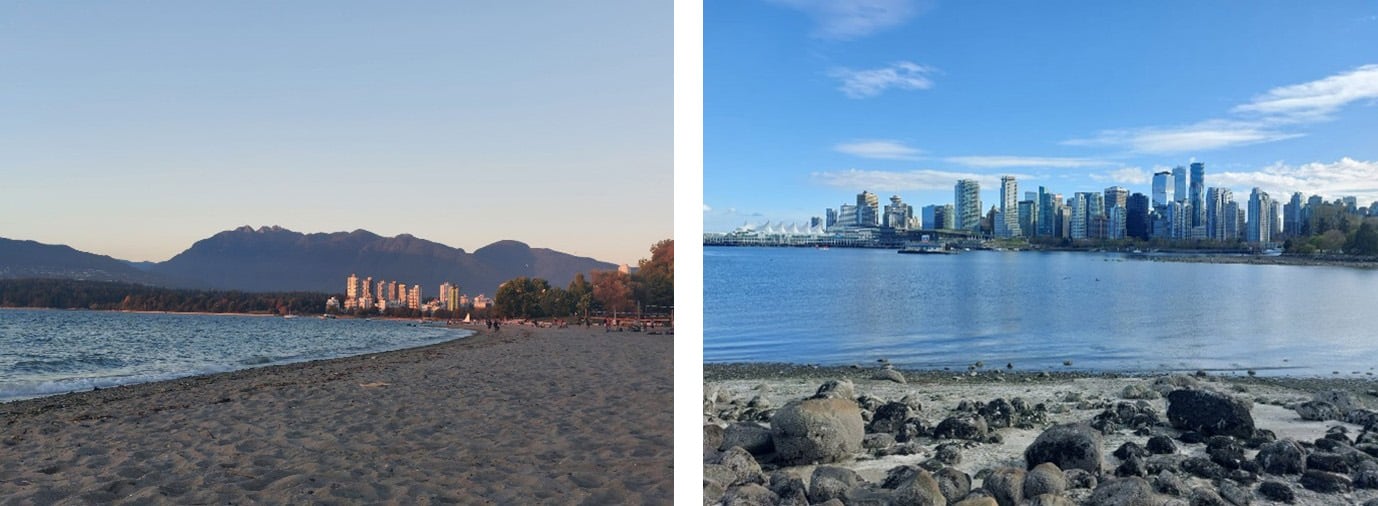 Figure 1: Vancouver Skyline. Left: View of Downtown from Kitsilano Beach, with the North Shore Mountains rising in the background. Right: Downtown as seen from the Seawall in Stanley Park.
Vancouver is also shaped by remarkable cultural diversity: according to Canadian census data, 47.1% of the population belong to a “visible minority group” [2]. With nearly 30% of the total population, people of Chinese descent form the largest non-European demographic group – which not only explains the city’s vibrant Chinatown, but also why outstanding Southeast Asian food can be found on almost every corner. And while wandering through the streets, you won’t just be traveling the world through its cuisine – you may also find yourself suddenly standing in the middle of a film set. No surprise there: after Los Angeles and New York, Vancouver is the third most important hub of the North American film industry [3], earning it the nickname “Hollywood North.” But it’s not only the film world that thrives here: research does too. Vancouver is internationally recognized as a hotspot for innovative RNA and lipid nanoparticle technologies – a field I had the chance to dive into during my internship.
Vaccinating with RNA: Next-Generation Vaccines
The success of the mRNA-based COVID-19 vaccines developed by BioNTech and Moderna has made the enormous potential of RNA-lipid nanoparticle (LNP) therapeutics unmistakably clear, sparking a global surge of interest in RNA-based medicines. The principle behind the technology is elegant: synthetic RNA is packaged into lipid nanoparticles, which facilitate its uptake into host cells. Once inside, the RNA is translated and the corresponding protein is produced – in the case of the COVID-19 vaccines, the coronavirus spike protein, which then triggers a specific immune response. One major advantage of this platform is its versatility: in principle, RNA vaccines can be designed against any protein-based antigen [4]. The RNA itself is chemically modified so that it elicits minimal innate immune activation and is degraded shortly after delivery – leaving only the produced antigen behind to train the adaptive immune system [5].
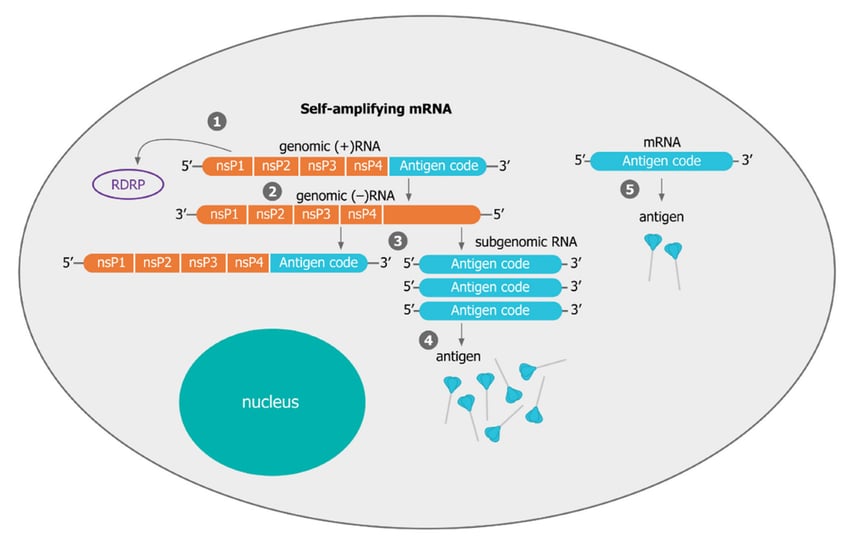 Figure 2: Mechanism of a VEEV-based self-amplifying mRNA (saRNA). (1) After release into the cytoplasm, the saRNA is translated and produces the nonstructural proteins nsP1-4, which together assemble the RNA-dependent RNA polymerase (RDRP). (2) The RDRP replicates the saRNA, generating additional copies. (3) At the same time, numerous subgenomic RNA molecules are produced. (4) As a result, the encoded antigen is translated in much higher amounts than from (5) a non-amplifying RNA [7].
Dr. Anna Blakney’s research group focuses on the molecular design and formulation optimization of innovative RNA vaccines and therapeutics. In addition to working with conventional mRNA, the team places particular emphasis on self-amplifying RNA (saRNA) – a variant that can replicate itself once delivered into the host cell (Fig. 2). saRNA is derived from positive-sense, single-stranded RNA viruses, most commonly alphaviruses such as Venezuelan equine encephalitis virus (VEEV). Unlike conventional mRNA – which typically drives protein production only for a few days – saRNA has been shown to sustain antigen expression for several weeks after a single administration, allowing for a stronger immune response with a lower dose [6]. These properties make saRNA a highly promising candidate for next-generation vaccines and other therapeutic applications.

Fighting Neurodegenerative Diseases with RNA: My Research Project
RNA is no longer used solely for vaccines – it is now being explored in a wide range of therapeutic approaches, including protein replacement therapy, gene editing, and increasingly, the treatment of neurodegenerative diseases. During my internship, I had the chance to contribute to a particularly exciting project led by PhD student Shekinah (Kaye) Soriano from Dr. Blakney’s lab (Fig. 3). The goal of the project is to develop an RNA-LNP platform capable of replacing lost neurons by directly reprogramming astrocytes into neurons. What may sound like science fiction is, in fact, already feasible: by expressing neurogenic transcription factors, astrocytes can be converted into so-called induced neurons (iNeurons) [8]. Where these transcription factors have traditionally been delivered using viral vectors such as adeno-associated viruses (AAVs), we instead rely on LNP-formulated RNA. To further improve the safety of the therapeutic approach, we incorporate a built-in “safety switch” into our RNA constructs. This switch is designed to enable cell-type-specific expression – ultimately improving both the efficacy and safety of the strategy.
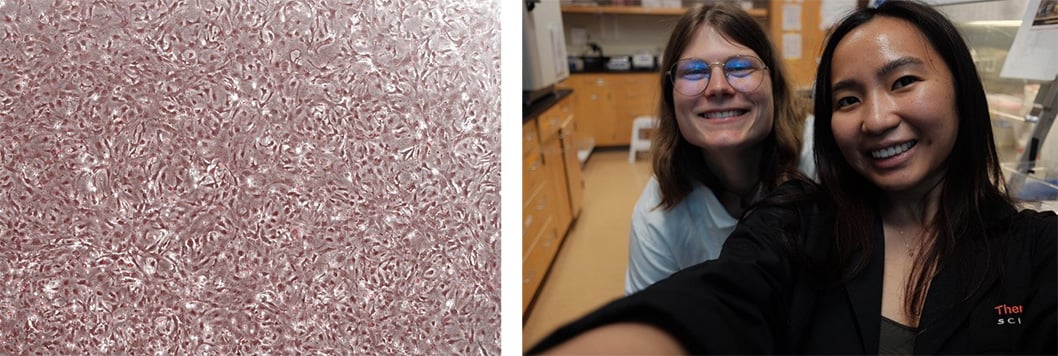 Figure 3: Impressions from my research internship. Left: Astrocytes transfected with LNP-RNA; the lipid dye DiD enables visualization under the fluorescence microscope. Right: In the lab with my supervisor, Kaye.
The project’s translational focus was especially exciting for me, and I had the opportunity to learn many new techniques – including working with mouse models for the first time. For our in vitro experiments, we isolated astrocytes from the cortices of neonatal mice, cultured them, and then transfected them with LNPs carrying RNA encoding neurogenic transcription factors (Fig. 3). By analyzing astrocyte- and neuron-specific markers, we could assess how successful the reprogramming had been. We also conducted in vivo pilot studies to evaluate the efficiency of our safety switch. To do so, we injected mice intravenously with firefly luciferase-encoding RNA and then used imaging to determine in which organs expression occurred.
Research in Canada: Where Work Meets the Great Outdoors
I loved working in the lab – not only because of the exciting research, but also because of the people I had the chance to work with. The group’s international makeup created a vibrant environment for intercultural exchange, and I learned a great deal about different countries, cultures, and religions. I’m always amazed at how research brings together people from completely different backgrounds, all driven by the same curiosity and working side by side to tackle research problems – and of course, the quick coffee chat in between experiments is essential!
But you rarely sit still with your coffee for long – sooner or later, the pull of the outdoors wins. The area around Vancouver has an unbelievable amount to offer: long hikes through stunning mountain landscapes and endless forests, kayaking trips across the ocean (fishing rod included, of course), plunges into bright blue alpine lakes, or nights spent alone in a tent under the stars – Canada lets you experience outdoor adventures of all kinds. I took full advantage of this luxury and spent practically every weekend exploring; it was the perfect balance to everyday life in the lab (Fig. 4). My conclusion after doing research in Canada: world-class science, wonderful people, breathtaking nature – a truly unforgettable experience, and one I would return to in a heartbeat!
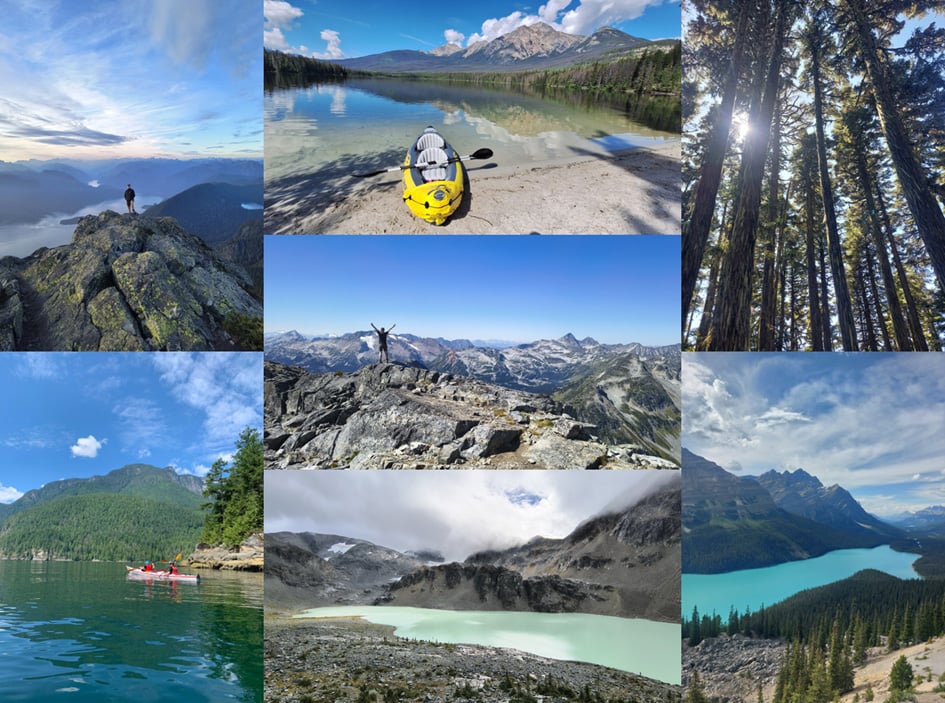 Figure 4: Canada’s breathtaking nature. Top left: Golden Ears Peak. Top center: Paddling on Pyramid Lake. Top right: Forest near Chilliwack. Middle: Mount Rohr. Bottom left: Kayaking on the Indian Arm. Bottom center: Wedgemount Lake. Bottom right: Peyto Lake.
Sources
[3] https://de.wikipedia.org/wiki/Vancouver, 27.10.2025
[4] Sahin, U., Karikó, K. & Türeci, Ö. mRNA-based therapeutics — developing a new class of drugs. Nat Rev Drug Discov 13, 759–780 (2014).
[5] Lee, J., Woodruff, M.C., Kim, E.H. et al. Knife’s edge: Balancing immunogenicity and reactogenicity in mRNA vaccines. Exp Mol Med 55, 1305–1313 (2023).
[6] Casmil IC, Jin J, Won EJ, Huang C, Liao S, Cha-Molstad H, Blakney AK. The advent of clinical self-amplifying RNA vaccines. Mol Ther. 2025 Jun 4;33(6):2565-2582.
[7] Blakney, A.K., Ip, S., Geall, A.J. An Update on Self-Amplifying mRNA Vaccine Development. Vaccines 2021, 9, 97.
[8] Jiang H, Qi H, Tang A, Hu S, Lai J. Start the engine of neuroregeneration: A mechanistic and strategic overview of direct astrocyte-to-neuron reprogramming. Ageing Res Rev. 2025 Aug;110:102808.
Preview Image: Emily Locke, personal photo (27.07.2025)