---
title: Invention of the Hybridoma Technology
description: On August 7, 1975, César Milstein and Georges Köhler published their seminal paper on the production of monoclonal antibodies in continuous cell culture. N
image: https://resources.biomol.com/hubfs/Imported_Blog_Media/Hybridoma-Technology-2.png
---
en
EN DE
[** My account ](https://www.biomol.com/account)
** Service/Help
- [Contact](https://www.biomol.com/contact)
- [Technical Service](https://www.biomol.com/technical-service)
- [FAQ](https://www.biomol.com/faq)
- [Shipping Costs](https://www.biomol.com/shipping-costs)
- [Product Search Tips](https://www.biomol.com/product-search-tips)
- [Distributors](https://www.biomol.com/distributors)
- [Company History](https://www.biomol.com/company-history)
- Cookie Settings
- [** Menu ](https://resources.biomol.com/biomol-blog/invention-of-the-hybridoma-technology#offcanvas--left)
- [**Search Tips ](https://www.biomol.com/product-search-tips)
- [** Search ](https://resources.biomol.com/biomol-blog/invention-of-the-hybridoma-technology#show-hide--search)
** Search
- [** ](https://www.biomol.com/product-search-tips)
- [** My account ](https://www.biomol.com/account)
- [Products ](https://www.biomol.com/products/)
- [Suppliers ](https://www.biomol.com/suppliers/)
- [Resources ](https://www.biomol.com/resources/)
- [Promotions ](https://www.biomol.com/promotions/)
- [About Biomol ](https://www.biomol.com/about-biomol/)
- [** My account ](https://www.biomol.com/account)
[** To category Products ](https://www.biomol.com/products/) **
- [Antibodies](https://www.biomol.com/products/antibodies/)
- [Primary Antibodies](https://www.biomol.com/products/antibodies/primary-antibodies/)
- [Secondary Antibodies](https://www.biomol.com/products/antibodies/secondary-antibodies/)
- [Igs and Isotype Controls](https://www.biomol.com/products/antibodies/igs-and-isotype-controls/)
- [Antibody Panels](https://www.biomol.com/products/antibodies/antibody-panels/)
- [Assay Kits](https://www.biomol.com/products/assay-kits/)
- [ELISA and Immunoassays](https://www.biomol.com/products/assay-kits/elisa-and-immunoassays/)
- [Biochemical Assays](https://www.biomol.com/products/assay-kits/biochemical-assays/)
- [Cell-Based Assays](https://www.biomol.com/products/assay-kits/cell-based-assays/)
- [Biological Samples](https://www.biomol.com/products/biological-samples/)
- [Cells](https://www.biomol.com/products/biological-samples/cells/)
- [Virus-based Tools](https://www.biomol.com/products/biological-samples/virus-based-tools/)
- [Lysates](https://www.biomol.com/products/biological-samples/lysates/)
- [Nucleic Acids](https://www.biomol.com/products/biological-samples/nucleic-acids/)
- [Blood Products](https://www.biomol.com/products/biological-samples/blood-products/)
- [Tissues](https://www.biomol.com/products/biological-samples/tissues/)
- [Other](https://www.biomol.com/products/biological-samples/other/)
- [Chemicals](https://www.biomol.com/products/chemicals/)
- [Biochemicals](https://www.biomol.com/products/chemicals/biochemicals/)
- [Lipids](https://www.biomol.com/products/chemicals/lipids/)
- [Reference Standards](https://www.biomol.com/products/chemicals/reference-standards/)
- [Dyes and Labeling Reagents](https://www.biomol.com/products/chemicals/dyes-and-labeling-reagents/)
- [Antibiotics](https://www.biomol.com/products/chemicals/antibiotics/)
- [Biological Buffers](https://www.biomol.com/products/chemicals/biological-buffers/)
- [Detergents](https://www.biomol.com/products/chemicals/detergents/)
- [CpG ODNs](https://www.biomol.com/products/chemicals/cpg-odns/)
- [Screening Libraries](https://www.biomol.com/products/chemicals/screening-libraries/)
- [Plasmids](https://www.biomol.com/products/plasmids/)
- [cDNA Clones](https://www.biomol.com/products/plasmids/cdna-clones/)
- [Other](https://www.biomol.com/products/plasmids/other/)
- [Primers](https://www.biomol.com/products/primers/)
- [qPCR Gene Primers](https://www.biomol.com/products/primers/qpcr-gene-primers/)
- [qPCR Gene Family Primers](https://www.biomol.com/products/primers/qpcr-gene-family-primers/)
- [qPCR Control Gene Primers](https://www.biomol.com/products/primers/qpcr-control-gene-primers/)
- [qPCR Primer Libraries](https://www.biomol.com/products/primers/qpcr-primer-libraries/)
- [Proteins and Peptides](https://www.biomol.com/products/proteins-and-peptides/)
- [Proteins](https://www.biomol.com/products/proteins-and-peptides/proteins/)
- [Cytokines](https://www.biomol.com/products/proteins-and-peptides/cytokines/)
- [Peptides](https://www.biomol.com/products/proteins-and-peptides/peptides/)
- [Toolkits](https://www.biomol.com/products/toolkits/)
- [Kit Components](https://www.biomol.com/products/toolkits/kit-components/)
- [Conjugation Kits](https://www.biomol.com/products/toolkits/conjugation-kits/)
- [Sample Prep Kits](https://www.biomol.com/products/toolkits/sample-prep-kits/)
- [Cloning and Expression Kits](https://www.biomol.com/products/toolkits/cloning-and-expression-kits/)
- [Mutagenesis Kits](https://www.biomol.com/products/toolkits/mutagenesis-kits/)
- [Sequencing Kits](https://www.biomol.com/products/toolkits/sequencing-kits/)
- [Accessory Reagents](https://www.biomol.com/products/accessory-reagents/)
- [Staining Solutions](https://www.biomol.com/products/accessory-reagents/staining-solutions/)
- [Cell Culture Media](https://www.biomol.com/products/accessory-reagents/cell-culture-media/)
- [Agaroses](https://www.biomol.com/products/accessory-reagents/agaroses/)
- [Stabilizers](https://www.biomol.com/products/accessory-reagents/stabilizers/)
- [Protein Markers](https://www.biomol.com/products/accessory-reagents/protein-markers/)
- [DNA Ladders](https://www.biomol.com/products/accessory-reagents/dna-ladders/)
- [Transfection Reagents](https://www.biomol.com/products/accessory-reagents/transfection-reagents/)
[** To category Products ](https://www.biomol.com/products/) **
- [AAT Bioquest](https://www.biomol.com/aat-bioquest/)
- [Abcore](https://www.biomol.com/abcore/)
- [Absea](https://www.biomol.com/absea/)
- [Acepix Biosciences](https://www.biomol.com/acepix/)
- [AdipoGen Life Sciences](https://www.biomol.com/adipogen/)
- [Akadeum Life Sciences](https://www.biomol.com/akadeum-life-sciences/)
- [Alithea Genomics](https://www.biomol.com/alithea-genomics/)
- [Amsbio](https://www.biomol.com/amsbio/)
- [Ancell](https://www.biomol.com/ancell/)
- [Arigo Biolaboratories](https://www.biomol.com/arigo/)
- [Assay Genie](https://www.biomol.com/assay-genie/)
- [AssayQuant](https://www.biomol.com/assayquant/)
- [Atlas Antibodies](https://www.biomol.com/atlas-antibodies/)
- [Badische Peptide & Proteine](https://www.biomol.com/bpp/)
- [Bertin Bioreagent](https://www.biomol.com/bertin-bioreagent/)
- [Bethyl Laboratories](https://www.biomol.com/bethyl/)
- [Biomol GmbH](https://www.biomol.com/biomol-gmbh/)
- [Biotium](https://www.biomol.com/biotium/)
- [BPS Bioscience](https://www.biomol.com/bps/)
- [Cavidi](https://www.biomol.com/cavidi/)
- [Cayman Chemical](https://www.biomol.com/cayman/)
- [Chemodex](https://www.biomol.com/chemodex/)
- [Chimerigen Laboratories](https://www.biomol.com/chimerigen/)
- [Croyez](https://www.biomol.com/croyez/)
- [Cusabio](https://www.biomol.com/cusabio/)
- [Cytion](https://www.biomol.com/cytion/)
- [Diaclone](https://www.biomol.com/diaclone/)
- [DIMA Biotech](https://www.biomol.com/dima/)
- [Elabscience](https://www.biomol.com/elabscience/)
- [ELK Biotechnology](https://www.biomol.com/elk-biotechnology/)
- [Expert Synthesis Solutions](https://www.biomol.com/ess/)
- [ForMedium](https://www.biomol.com/formedium/)
- [GenScript](https://www.biomol.com/genscript/)
- [Hycult Biotech](https://www.biomol.com/hycult-biotech/)
- [ImmunoChemistry](https://www.biomol.com/ict/)
- [Indigo Biosciences](https://www.biomol.com/indigo/)
- [Innaxon](https://www.biomol.com/innaxon/)
- [InVitria](https://www.biomol.com/invitria/)
- [IsoSciences](https://www.biomol.com/isosciences/)
- [JaICA](https://www.biomol.com/jaica/)
- [KACTUS](https://www.biomol.com/kactus/)
- [Kingfisher Biotech](https://www.biomol.com/kingfisher/)
- [LKT Laboratories](https://www.biomol.com/lkt/)
- [LubioScience](https://www.biomol.com/lubioscience/)
- [Micronbrane Medical](https://www.biomol.com/micronbrane/)
- [MONOSAN](https://www.biomol.com/monosan/)
- [nanoComposix](https://www.biomol.com/nanocomposix/)
- [Navinci Diagnostics](https://www.biomol.com/navinci/)
- [NeoBiotechnologies](https://www.biomol.com/neobiotechnologies/)
- [NewEast Biosciences](https://www.biomol.com/neweastbio/)
- [Novoprotein](https://www.biomol.com/novoprotein/)
- [NSJ Bioreagents](https://www.biomol.com/nsjbio/)
- [NuSep](https://www.biomol.com/nusep/)
- [NZYtech](https://www.biomol.com/nzytech/)
- [ORF Genetics](https://www.biomol.com/orf-genetics/)
- [Pacific Coast Bio](https://www.biomol.com/pacific-coast-bio/)
- [Peptides & Elephants](https://www.biomol.com/peptides-and-elephants/)
- [Quantoom Biosciences](https://www.biomol.com/quantoom/)
- [Randox](https://www.biomol.com/randox/)
- [RealTimePrimers](https://www.biomol.com/realtimeprimers/)
- [Research Donors](https://www.biomol.com/research-donors/)
- [RevMAb Biosciences](https://www.biomol.com/revmab/)
- [Rockland Immunochemicals](https://www.biomol.com/rockland/)
- [Slingshot Biosciences](https://www.biomol.com/slingshot/)
- [South Bay Bio](https://www.biomol.com/south-bay-bio/)
- [SYNkinase](https://www.biomol.com/synkinase/)
- [TargetMol](https://www.biomol.com/targetmol/)
- [U-genes](https://www.biomol.com/u-genes/)
- [United States Biological](https://www.biomol.com/usbiological/)
- [Virax Biolabs](https://www.biomol.com/virax-biolabs/)
[** To category Products ](https://www.biomol.com/products/) **
- [Biomol Blog](https://resources.biomol.com/biomol-blog)
- [Applications](https://www.biomol.com/resources/applications/)
- [Webinars](https://www.biomol.com/resources/webinars/bps-bioscience/)
- [Protocols](https://www.biomol.com/resources/protocols/)
- [Buffer Recipes](https://www.biomol.com/resources/buffer-recipes/)
- [Catalogs](https://www.biomol.com/resources/catalogs/)
- [Wall Posters](https://www.biomol.com/resources/wall-posters/)
- [Conference Calendar](https://www.biomol.com/resources/conference-calendar/)
- [Newsletter](https://www.biomol.com/newsletter)
- [Tools](https://www.biomol.com/resources/tools/molarity-calculator/)
- [Molarity Calculator](https://www.biomol.com/resources/tools/molarity-calculator/)
- [Cytokine Activity Conversion](https://www.biomol.com/resources/tools/cytokine-activity-conversion/)
- [ELISA Analysis](https://www.biomol.com/resources/tools/elisa-analysis/)
- [Fluorescence Spectrum Viewer](https://www.biomol.com/resources/tools/fluorescence-spectrum-viewer/)
Resources
Download detailed protocols and guides for different applications. Get the latest catalogs and brochures from our partners and learn where you can meet us in person at conferences. Learn more about our products in our blog and use online tools to... [ learn more ](https://www.biomol.com/resources/)
[** To category Products ](https://www.biomol.com/products/) **
- [Company History](https://www.biomol.com/company-history)
- [Awards](https://www.biomol.com/awards)
- [Contact](https://www.biomol.com/contact-form)
- [Technical Support](https://www.biomol.com/technical-service)
- [Career](https://www.biomol.com/job-offers)
- [FAQ](https://support.biomol.com/?hsLang=en)
- [ Close menu ** ](https://resources.biomol.com/biomol-blog/invention-of-the-hybridoma-technology#close-categories-menu)
en
DE
Categories
- [Products](https://www.biomol.com/products/)
- [Suppliers](https://www.biomol.com/suppliers/)
- [Resources](https://www.biomol.com/resources/)
- [Promotions](https://www.biomol.com/promotions/)
- [About Biomol](https://www.biomol.com/about-biomol/)
Information
- [Contact](https://www.biomol.com/contact)
- [Technical Service](https://www.biomol.com/technical-service)
- [FAQ](https://www.biomol.com/faq)
- [Shipping Costs](https://www.biomol.com/shipping-costs)
- [Product Search Tips](https://www.biomol.com/product-search-tips)
- [Distributors](https://www.biomol.com/distributors)
- [Company History](https://www.biomol.com/company-history)
- Cookie Settings
- [Home](https://www.biomol.com/)
- [Blog](https://resources.biomol.com/biomol-blog)
- Invention of the Hybridoma Technology
- [Antibodies](https://resources.biomol.com/biomol-blog/tag/antibodies)
- [Science History](https://resources.biomol.com/biomol-blog/tag/science-history)
- [Biomol](https://resources.biomol.com/biomol-blog/tag/biomol)
# Invention of the Hybridoma Technology
Written by: Dr. Balint Földesi 08-06-2018
Share post on social media:
[Share on Whatsapp ](whatsapp://send?text=https://resources.biomol.com/biomol-blog/invention-of-the-hybridoma-technology) [Share on X ](https://twitter.com/intent/tweet?source=https://resources.biomol.com/biomol-blog/invention-of-the-hybridoma-technology&text=Invention%20of%20the%20Hybridoma%20Technology%20-%20https://resources.biomol.com/biomol-blog/invention-of-the-hybridoma-technology) [Share on LinkedIn ](https://www.linkedin.com/shareArticle?mini=true&url=https://resources.biomol.com/biomol-blog/invention-of-the-hybridoma-technology) [Share on Facebook ](https://www.facebook.com/sharer/sharer.php?u=https://resources.biomol.com/biomol-blog/invention-of-the-hybridoma-technology)
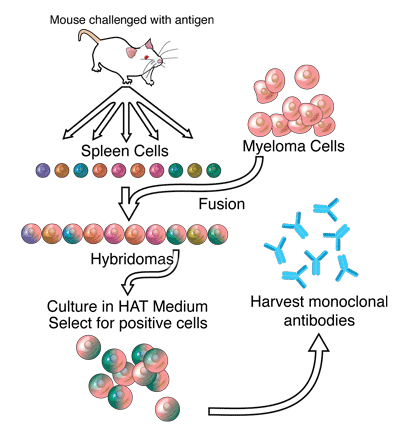
On August 7, 1975, César Milstein and Georges Köhler published their seminal paper on the production of monoclonal antibodies in continuous cell culture. Nine years later, they shared the Nobel Prize in Physiology or Medicine with the Danish scientist Niels K. Jjerne "for (their) theories concerning the specificity in development and control of the immune system and the discovery of the principle for production of monoclonal antibodies".
#### Childhood and Education in Argentina
César Milstein was born in 1927 in Bahía Blanca, Argentina, to Jewish immigrants. His fascination with natural sciences, especially biochemistry, was sparked at an early age by one of his cousins who was studying the chemistry of snake poisons at the Instituto Malbrán, and Paul de Kruif's book Microbe Hunters. In 1945, he began studying chemistry at the University of Buenos Aires, graduating in 1952. Taking a year off due to political unrest in Argentina under the Peronist government and him being a prime target as president of the student union, he traveled through Europe. He returned to Argentina in 1954 and began working toward earning his Ph.D. under the supervision of Professor Andrés Stoppani.
#### Cambridge, Back, and There Again
After completing his doctoral in 1957, Milstein joined the laboratory of Malcolm Dixon in Cambridge for a second doctoral study, working with Nobel Prize laureate Frederick Sanger on enzymology. Sanger's work on protein and nucleic acid sequencing would become one of the foundations of Milstein's future scientific exploits. After finishing his second thesis, he became head of the Department of Molecular Biology at the Malbrán Institute for two years, but political turmoil and persecution again prompted Milstein to emmigrate to Europe - this time for good.
Only after his return to Cambridge did Milstein begin working on antibodies. Of particular interest were the mechanisms behind antibody function and diversity. To this end, he spent the first months at the Laboratory of Molecular Biology (LMB) investigating the Bence-Jones protein, a protein complex formed by two antibody light chains, found in the urine of some multiple myeloma patients. At the time, protein sequencing was still tedious work, but Milstein and his students succeeded in elucidating the position and structural function of the disulfide bonds: First in the Bence-Jones protein and later in the subunits of normal antibodies. In the early 1970s, Milstein had changed his focus from the genetic origin of antibody diversity to analyzing the mRNA of antibody secreting tumors. In light of the rather meager results it became apparent that to this end, Milstein's group had to move away from solid tumors and use tissue culture cells. Milstein and his colleague, the pathologist George Brownlee, chose the mouse myeloma cell line, MOPC21, both for its easy growth and high immunoglobulin production.
#### From Myeloma to Hybridoma
Over the course of the next two to three years, Milstein and his students and postdocs, most notably David Secher and Dick Cotton, established protocols for myeloma cell culturing and cloning that would prove indispensable in the future. Of particular importance was Cotton's discovery that by fusing different myeloma cells, he was able to generate hybrid cells that expressed both sets of antibody subunits.
In 1974, Georges Köhler joined Milstein in Cambridge. He had attended one of Milstein's talks at the University of Basel and had taken an immediate interest in his research. Köhler began his postdoctoral research by looking for V-region mutants of their myeloma. The results were rather disappointing and even in the rare event of finding a V-mutant, there was no practical way of determining its specificity. Cotton's previous experiments, as well as a 1974 publication by J. Schwaber and E. Cohen on fusing human lymphocytes with myeloma cells, now came into play. Milstein and Köhler wondered whether they could create immortal hybrid cells by fusing normal B cells from immunized mice with their myeloma cells. For incidental reasons, they had all the requirements fulfilled and it worked in the first attempt. By cloning individual hybrid cells, they established the first hybridoma cell lines. Their 1975 paper on these experiments has become a citation classic, and in the course of a few years, hundreds of different monoclonal antibodies became available to researchers worldwide.
#### Epilogue
If you would like more insight into Cesar Milstein's academic career and the advent and early commercialization of the hybridoma technology, we highly recommend a visit to whatisbiotechnology.org's [exhibition on César Milstein's life](http://www.whatisbiotechnology.org/exhibitions/milstein/introduction).
*Author: Mike Jones. This file is licensed under the Creative Commons Attribution-Share Alike 3.0 Unported license*
[Read More Science History Articles](https://resources.biomol.com/science-history?hsLang=en)
## You might also like...
SEE MORE BLOGPOST

##### The Discovery of AIDS
On June 5, 1981, Michael S. Gottlieb, an immunologist and assistant professor of medicine at UCLA, and Joel Weisman, DO, jointly reported...
- [Science History](https://resources.biomol.com/biomol-blog/tag/science-history)
- [Biomol](https://resources.biomol.com/biomol-blog/tag/biomol)
##### The First Human Gene Therapy
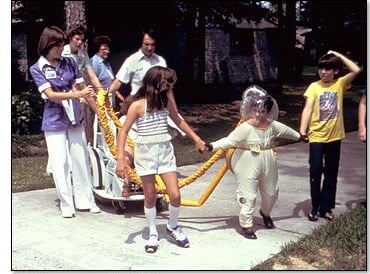
On September 14, 1990, Ashanti DeSilva became the first of only two participants in the world's first approved gene therapy trial. The...
- [Science History](https://resources.biomol.com/biomol-blog/tag/science-history)
- [Biomol](https://resources.biomol.com/biomol-blog/tag/biomol)
##### The Cure for Scurvy
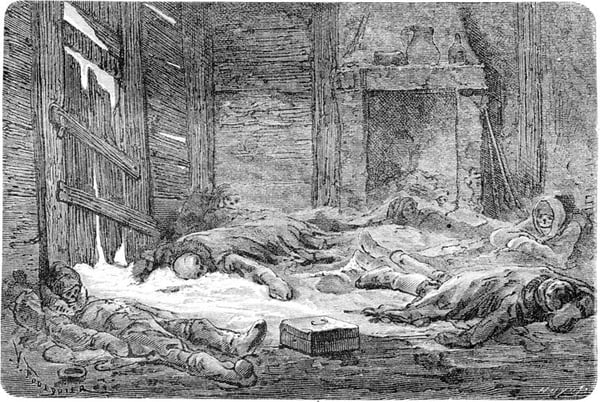
On May 20, 1747, James Lind, the ship surgeon of the HMS Salisbury, conducted one of the first clinical trials in medical history and...
- [Science History](https://resources.biomol.com/biomol-blog/tag/science-history)
- [Biomol](https://resources.biomol.com/biomol-blog/tag/biomol)
Biomol Newsletter
Subscribe to the free Biomol newsletter and receive updates on research tools from Biomol. You will also receive a **10€ Voucher** for your next order.
Click here to subscribe to our newsletter! **
Important Notice
Please note that our products are for **research use only** and **cannot be delivered to private individuals** and addresses, but only to authorized institutions and businesses.
You can find us on
[** ](https://www.facebook.com/biomol) [** ](https://www.linkedin.com/company/biomol-gmbh/) [** ](https://www.xing.com/companies/biomolgmbh) [** ](https://www.youtube.com/channel/UCRD-h8vgRJc2p83-y_ITJDA) [ ](https://mastodon.social/@biomol)
Legal
- [ Privacy Policy ](https://www.biomol.com/privacy-policy)
- Cookie Settings
- [ Trademarks ](https://www.biomol.com/trademarks)
- [ Terms and Conditions ](https://www.biomol.com/terms-and-conditions)
- [ Imprint ](https://www.biomol.com/imprint)
About Biomol
- [ Contact ](https://www.biomol.com/contact)
- [ Technical Service ](https://www.biomol.com/technical-service)
- [ FAQ ](https://www.biomol.com/faq)
- [ Shipping Costs ](https://www.biomol.com/shipping-costs)
- [ Product Search Tips ](https://www.biomol.com/product-search-tips)
- [ Distributors ](https://www.biomol.com/distributors)
- [ Company History ](https://www.biomol.com/company-history)
- [ Memberships ](https://www.biomol.com/memberships)
- [ Job Offers ](https://www.biomol.com/job-offers)
- [ Sitemap ](https://www.biomol.com/sitemap)
Customer Service
Mon - Thu, 9 am - 5 pm CET
Fri, 9 am - 4 pm CET
Tel: [+49-40-8532600](tel:+49-40-8532600)
Email: [info@biomol.com](mailto:info@biomol.com)
Awards
[ ](https://www.biomol.com/awards)
Payment Methods

Shipping
 We ship with UPS Express Saver.
**Free** [shipping and coolant](https://www.biomol.com/shipping-costs) for online orders over 1,000 € within Germany *(does not apply when shipping fresh blood products from [Research Donors](https://www.biomol.com/research-donors/))*.
[** ](https://www.facebook.com/biomol) [** ](https://www.linkedin.com/company/biomol-gmbh/) [** ](https://www.xing.com/companies/biomolgmbh) [** ](https://www.youtube.com/channel/UCRD-h8vgRJc2p83-y_ITJDA) [ ](https://mastodon.social/@biomol)
© 2025 Biomol GmbH - Life Science Shop | Kieler Straße 303a | 22525 Hamburg | Germany
```json
{
"@context" : "https://schema.org",
"@type" : "BlogPosting",
"author" : {
"@type" : "Person",
"name" : "Dr. Balint Földesi",
"url" : "https://resources.biomol.com/biomol-blog/author/dr-balint-földesi"
},
"dateModified" : "2025-04-07T18:38:31.619Z",
"datePublished" : "2018-08-06T22:00:00.000Z",
"headline" : "Invention of the Hybridoma Technology",
"image" : [ "https://resources.biomol.com/hubfs/Imported_Blog_Media/Hybridoma-Technology-2.png" ],
"mainEntityOfPage" : {
"@id" : "https://resources.biomol.com/biomol-blog/invention-of-the-hybridoma-technology",
"@type" : "WebPage"
},
"publisher" : {
"@type" : "Organization",
"logo" : {
"@type" : "ImageObject",
"url" : "https://resources.biomol.com/hubfs/Biomol/biomol-logo.png"
}
}
}
```