---
title: How Do Antibiotics Affect Protein Synthesis?
description: There are different types of antibiotics targeting translation. But how do these antibiotics inhibit protein synthesis?
image: https://resources.biomol.com/hubfs/Imported_Blog_Media/How-Do-Antibiotics-Work-Apr-07-2025-06-38-09-3288-PM.png
---
en
EN DE
[** My account ](https://www.biomol.com/account)
** Service/Help
- [Contact](https://www.biomol.com/contact)
- [Technical Service](https://www.biomol.com/technical-service)
- [FAQ](https://www.biomol.com/faq)
- [Shipping Costs](https://www.biomol.com/shipping-costs)
- [Product Search Tips](https://www.biomol.com/product-search-tips)
- [Distributors](https://www.biomol.com/distributors)
- [Company History](https://www.biomol.com/company-history)
- Cookie Settings
- [** Menu ](https://resources.biomol.com/biomol-blog/how-do-antibiotics-affect-protein-synthesis#offcanvas--left)
- [**Search Tips ](https://www.biomol.com/product-search-tips)
- [** Search ](https://resources.biomol.com/biomol-blog/how-do-antibiotics-affect-protein-synthesis#show-hide--search)
** Search
- [** ](https://www.biomol.com/product-search-tips)
- [** My account ](https://www.biomol.com/account)
- [Products ](https://www.biomol.com/products/)
- [Suppliers ](https://www.biomol.com/suppliers/)
- [Resources ](https://www.biomol.com/resources/)
- [Promotions ](https://www.biomol.com/promotions/)
- [About Biomol ](https://www.biomol.com/about-biomol/)
- [** My account ](https://www.biomol.com/account)
[** To category Products ](https://www.biomol.com/products/) **
- [Antibodies](https://www.biomol.com/products/antibodies/)
- [Primary Antibodies](https://www.biomol.com/products/antibodies/primary-antibodies/)
- [Secondary Antibodies](https://www.biomol.com/products/antibodies/secondary-antibodies/)
- [Igs and Isotype Controls](https://www.biomol.com/products/antibodies/igs-and-isotype-controls/)
- [Antibody Panels](https://www.biomol.com/products/antibodies/antibody-panels/)
- [Assay Kits](https://www.biomol.com/products/assay-kits/)
- [ELISA and Immunoassays](https://www.biomol.com/products/assay-kits/elisa-and-immunoassays/)
- [Biochemical Assays](https://www.biomol.com/products/assay-kits/biochemical-assays/)
- [Cell-Based Assays](https://www.biomol.com/products/assay-kits/cell-based-assays/)
- [Biological Samples](https://www.biomol.com/products/biological-samples/)
- [Cells](https://www.biomol.com/products/biological-samples/cells/)
- [Virus-based Tools](https://www.biomol.com/products/biological-samples/virus-based-tools/)
- [Lysates](https://www.biomol.com/products/biological-samples/lysates/)
- [Nucleic Acids](https://www.biomol.com/products/biological-samples/nucleic-acids/)
- [Blood Products](https://www.biomol.com/products/biological-samples/blood-products/)
- [Tissues](https://www.biomol.com/products/biological-samples/tissues/)
- [Other](https://www.biomol.com/products/biological-samples/other/)
- [Chemicals](https://www.biomol.com/products/chemicals/)
- [Biochemicals](https://www.biomol.com/products/chemicals/biochemicals/)
- [Lipids](https://www.biomol.com/products/chemicals/lipids/)
- [Reference Standards](https://www.biomol.com/products/chemicals/reference-standards/)
- [Dyes and Labeling Reagents](https://www.biomol.com/products/chemicals/dyes-and-labeling-reagents/)
- [Antibiotics](https://www.biomol.com/products/chemicals/antibiotics/)
- [Biological Buffers](https://www.biomol.com/products/chemicals/biological-buffers/)
- [Detergents](https://www.biomol.com/products/chemicals/detergents/)
- [CpG ODNs](https://www.biomol.com/products/chemicals/cpg-odns/)
- [Screening Libraries](https://www.biomol.com/products/chemicals/screening-libraries/)
- [Plasmids](https://www.biomol.com/products/plasmids/)
- [cDNA Clones](https://www.biomol.com/products/plasmids/cdna-clones/)
- [Other](https://www.biomol.com/products/plasmids/other/)
- [Primers](https://www.biomol.com/products/primers/)
- [qPCR Gene Primers](https://www.biomol.com/products/primers/qpcr-gene-primers/)
- [qPCR Gene Family Primers](https://www.biomol.com/products/primers/qpcr-gene-family-primers/)
- [qPCR Control Gene Primers](https://www.biomol.com/products/primers/qpcr-control-gene-primers/)
- [qPCR Primer Libraries](https://www.biomol.com/products/primers/qpcr-primer-libraries/)
- [Proteins and Peptides](https://www.biomol.com/products/proteins-and-peptides/)
- [Proteins](https://www.biomol.com/products/proteins-and-peptides/proteins/)
- [Cytokines](https://www.biomol.com/products/proteins-and-peptides/cytokines/)
- [Peptides](https://www.biomol.com/products/proteins-and-peptides/peptides/)
- [Toolkits](https://www.biomol.com/products/toolkits/)
- [Kit Components](https://www.biomol.com/products/toolkits/kit-components/)
- [Conjugation Kits](https://www.biomol.com/products/toolkits/conjugation-kits/)
- [Sample Prep Kits](https://www.biomol.com/products/toolkits/sample-prep-kits/)
- [Cloning and Expression Kits](https://www.biomol.com/products/toolkits/cloning-and-expression-kits/)
- [Mutagenesis Kits](https://www.biomol.com/products/toolkits/mutagenesis-kits/)
- [Sequencing Kits](https://www.biomol.com/products/toolkits/sequencing-kits/)
- [Accessory Reagents](https://www.biomol.com/products/accessory-reagents/)
- [Staining Solutions](https://www.biomol.com/products/accessory-reagents/staining-solutions/)
- [Cell Culture Media](https://www.biomol.com/products/accessory-reagents/cell-culture-media/)
- [Agaroses](https://www.biomol.com/products/accessory-reagents/agaroses/)
- [Stabilizers](https://www.biomol.com/products/accessory-reagents/stabilizers/)
- [Protein Markers](https://www.biomol.com/products/accessory-reagents/protein-markers/)
- [DNA Ladders](https://www.biomol.com/products/accessory-reagents/dna-ladders/)
- [Transfection Reagents](https://www.biomol.com/products/accessory-reagents/transfection-reagents/)
[** To category Products ](https://www.biomol.com/products/) **
- [AAT Bioquest](https://www.biomol.com/aat-bioquest/)
- [Abcore](https://www.biomol.com/abcore/)
- [Absea](https://www.biomol.com/absea/)
- [Acepix Biosciences](https://www.biomol.com/acepix/)
- [AdipoGen Life Sciences](https://www.biomol.com/adipogen/)
- [Akadeum Life Sciences](https://www.biomol.com/akadeum-life-sciences/)
- [Alithea Genomics](https://www.biomol.com/alithea-genomics/)
- [Amsbio](https://www.biomol.com/amsbio/)
- [Ancell](https://www.biomol.com/ancell/)
- [Arigo Biolaboratories](https://www.biomol.com/arigo/)
- [Assay Genie](https://www.biomol.com/assay-genie/)
- [AssayQuant](https://www.biomol.com/assayquant/)
- [Atlas Antibodies](https://www.biomol.com/atlas-antibodies/)
- [Badische Peptide & Proteine](https://www.biomol.com/bpp/)
- [Bertin Bioreagent](https://www.biomol.com/bertin-bioreagent/)
- [Bethyl Laboratories](https://www.biomol.com/bethyl/)
- [Biomol GmbH](https://www.biomol.com/biomol-gmbh/)
- [Biotium](https://www.biomol.com/biotium/)
- [BPS Bioscience](https://www.biomol.com/bps/)
- [Cavidi](https://www.biomol.com/cavidi/)
- [Cayman Chemical](https://www.biomol.com/cayman/)
- [Chemodex](https://www.biomol.com/chemodex/)
- [Chimerigen Laboratories](https://www.biomol.com/chimerigen/)
- [Croyez](https://www.biomol.com/croyez/)
- [Cusabio](https://www.biomol.com/cusabio/)
- [Cytion](https://www.biomol.com/cytion/)
- [Diaclone](https://www.biomol.com/diaclone/)
- [DIMA Biotech](https://www.biomol.com/dima/)
- [Elabscience](https://www.biomol.com/elabscience/)
- [ELK Biotechnology](https://www.biomol.com/elk-biotechnology/)
- [Expert Synthesis Solutions](https://www.biomol.com/ess/)
- [ForMedium](https://www.biomol.com/formedium/)
- [GenScript](https://www.biomol.com/genscript/)
- [Hycult Biotech](https://www.biomol.com/hycult-biotech/)
- [ImmunoChemistry](https://www.biomol.com/ict/)
- [Indigo Biosciences](https://www.biomol.com/indigo/)
- [Innaxon](https://www.biomol.com/innaxon/)
- [InVitria](https://www.biomol.com/invitria/)
- [IsoSciences](https://www.biomol.com/isosciences/)
- [JaICA](https://www.biomol.com/jaica/)
- [KACTUS](https://www.biomol.com/kactus/)
- [Kingfisher Biotech](https://www.biomol.com/kingfisher/)
- [LKT Laboratories](https://www.biomol.com/lkt/)
- [LubioScience](https://www.biomol.com/lubioscience/)
- [Micronbrane Medical](https://www.biomol.com/micronbrane/)
- [MONOSAN](https://www.biomol.com/monosan/)
- [nanoComposix](https://www.biomol.com/nanocomposix/)
- [Navinci Diagnostics](https://www.biomol.com/navinci/)
- [NeoBiotechnologies](https://www.biomol.com/neobiotechnologies/)
- [NewEast Biosciences](https://www.biomol.com/neweastbio/)
- [Novoprotein](https://www.biomol.com/novoprotein/)
- [NSJ Bioreagents](https://www.biomol.com/nsjbio/)
- [NuSep](https://www.biomol.com/nusep/)
- [NZYtech](https://www.biomol.com/nzytech/)
- [ORF Genetics](https://www.biomol.com/orf-genetics/)
- [Pacific Coast Bio](https://www.biomol.com/pacific-coast-bio/)
- [Peptides & Elephants](https://www.biomol.com/peptides-and-elephants/)
- [Quantoom Biosciences](https://www.biomol.com/quantoom/)
- [Randox](https://www.biomol.com/randox/)
- [RealTimePrimers](https://www.biomol.com/realtimeprimers/)
- [Research Donors](https://www.biomol.com/research-donors/)
- [RevMAb Biosciences](https://www.biomol.com/revmab/)
- [Rockland Immunochemicals](https://www.biomol.com/rockland/)
- [Slingshot Biosciences](https://www.biomol.com/slingshot/)
- [South Bay Bio](https://www.biomol.com/south-bay-bio/)
- [SYNkinase](https://www.biomol.com/synkinase/)
- [TargetMol](https://www.biomol.com/targetmol/)
- [U-genes](https://www.biomol.com/u-genes/)
- [United States Biological](https://www.biomol.com/usbiological/)
- [Virax Biolabs](https://www.biomol.com/virax-biolabs/)
[** To category Products ](https://www.biomol.com/products/) **
- [Biomol Blog](https://resources.biomol.com/biomol-blog)
- [Applications](https://www.biomol.com/resources/applications/)
- [Webinars](https://www.biomol.com/resources/webinars/bps-bioscience/)
- [Protocols](https://www.biomol.com/resources/protocols/)
- [Buffer Recipes](https://www.biomol.com/resources/buffer-recipes/)
- [Catalogs](https://www.biomol.com/resources/catalogs/)
- [Wall Posters](https://www.biomol.com/resources/wall-posters/)
- [Conference Calendar](https://www.biomol.com/resources/conference-calendar/)
- [Newsletter](https://www.biomol.com/newsletter)
- [Tools](https://www.biomol.com/resources/tools/molarity-calculator/)
- [Molarity Calculator](https://www.biomol.com/resources/tools/molarity-calculator/)
- [Cytokine Activity Conversion](https://www.biomol.com/resources/tools/cytokine-activity-conversion/)
- [ELISA Analysis](https://www.biomol.com/resources/tools/elisa-analysis/)
- [Fluorescence Spectrum Viewer](https://www.biomol.com/resources/tools/fluorescence-spectrum-viewer/)
Resources
Download detailed protocols and guides for different applications. Get the latest catalogs and brochures from our partners and learn where you can meet us in person at conferences. Learn more about our products in our blog and use online tools to... [ learn more ](https://www.biomol.com/resources/)
[** To category Products ](https://www.biomol.com/products/) **
- [Company History](https://www.biomol.com/company-history)
- [Awards](https://www.biomol.com/awards)
- [Contact](https://www.biomol.com/contact-form)
- [Technical Support](https://www.biomol.com/technical-service)
- [Career](https://www.biomol.com/job-offers)
- [FAQ](https://support.biomol.com/?hsLang=en)
- [ Close menu ** ](https://resources.biomol.com/biomol-blog/how-do-antibiotics-affect-protein-synthesis#close-categories-menu)
en
DE
Categories
- [Products](https://www.biomol.com/products/)
- [Suppliers](https://www.biomol.com/suppliers/)
- [Resources](https://www.biomol.com/resources/)
- [Promotions](https://www.biomol.com/promotions/)
- [About Biomol](https://www.biomol.com/about-biomol/)
Information
- [Contact](https://www.biomol.com/contact)
- [Technical Service](https://www.biomol.com/technical-service)
- [FAQ](https://www.biomol.com/faq)
- [Shipping Costs](https://www.biomol.com/shipping-costs)
- [Product Search Tips](https://www.biomol.com/product-search-tips)
- [Distributors](https://www.biomol.com/distributors)
- [Company History](https://www.biomol.com/company-history)
- Cookie Settings
- [Home](https://www.biomol.com/)
- [Blog](https://resources.biomol.com/biomol-blog)
- How Do Antibiotics Affect Protein Synthesis?
- [Antibiotics](https://resources.biomol.com/biomol-blog/tag/antibiotics)
- [Cayman Chemical](https://resources.biomol.com/biomol-blog/tag/cayman-chemical)
# How Do Antibiotics Affect Protein Synthesis?
Written by: Julia Urban 09-12-2021
Share post on social media:
[Share on Whatsapp ](whatsapp://send?text=https://resources.biomol.com/biomol-blog/how-do-antibiotics-affect-protein-synthesis) [Share on X ](https://twitter.com/intent/tweet?source=https://resources.biomol.com/biomol-blog/how-do-antibiotics-affect-protein-synthesis&text=How%20Do%20Antibiotics%20Affect%20Protein%20Synthesis?%20-%20https://resources.biomol.com/biomol-blog/how-do-antibiotics-affect-protein-synthesis) [Share on LinkedIn ](https://www.linkedin.com/shareArticle?mini=true&url=https://resources.biomol.com/biomol-blog/how-do-antibiotics-affect-protein-synthesis) [Share on Facebook ](https://www.facebook.com/sharer/sharer.php?u=https://resources.biomol.com/biomol-blog/how-do-antibiotics-affect-protein-synthesis)
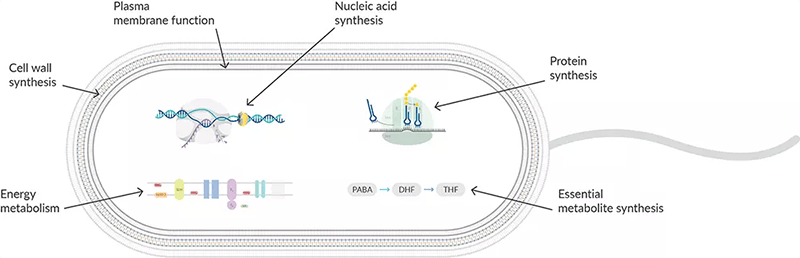
Protein synthesis inhibitors act at the ribosome level, working at different stages of prokaryotic mRNA translation into proteins (**Figure 1**). They are highly selective to 70S ribosomes in prokaryotic cells since eukaryotic cells have a different ribosomal size, sequence, structure, and ratio of protein to RNA. Translation in prokaryotes involves the assembly of a small subunit (30S) and a large subunit (50S) to form a ribosome that binds mRNA to read the nucleotide sequence. tRNA binds to the A, P, and E sites during the initiation, elongation, and termination stages to translate the polypeptide sequence. By targeting different stages of mRNA translation, antibiotics can be swapped if resistance develops.
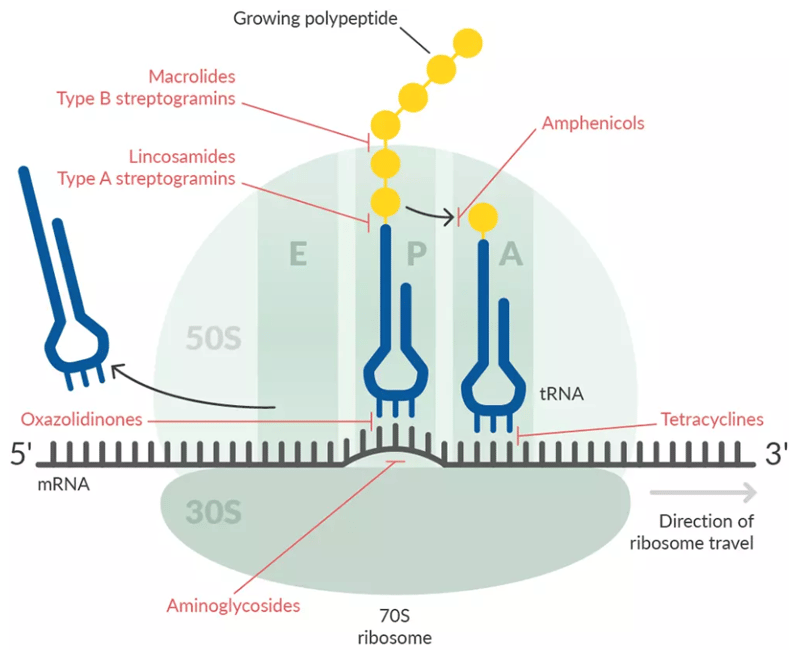
**Figure 1**: Antibiotics interfere with multiple stages of protein synthesis.
[Tetracyclines](https://www.biomol.com/tetracyclines) bind reversibly to the 30S ribosomal subunit at a position that blocks the binding of the tRNA to the acceptor site on the mRNA-ribosome complex. Resistance to tetracyclines develops primarily by preventing accumulation of the drug inside the bacterial cell either by decreasing influx or increasing efflux.
[Aminoglycosides](https://www.biomol.com/aminoglycosides) and aminonucleosides, such as [puromycin](https://www.biomol.com/products/chemicals/antibiotics/puromycin-hydrochloride-cay13884-25), bind to the active site of 16S rRNA within the 30S ribosomal subunit, interfering with the accurate recognition of tRNA by rRNA during translation. The initial steps required for peptide synthesis, such as binding of mRNA and the association of the 50S ribosomal subunit, are uninterrupted. The elongation fails to occur due to disruption of the mechanisms for ensuring translational accuracy, causing premature termination of nascent polypeptide chains. In the case of puromycin, these properties have been exploited in assays for peptide-bond formation and elongation and also as a selection agent in cell culture systems. Resistance to aminoglycosides develops from structural modifications to the antibiotic made by aminoglycoside phosphotransferases, aminoglycoside nucleotidyltransferases, and aminoglycoside acetyltransferases expressed in resistant organisms.
[Oxazolidinones](https://www.biomol.com/oxazolidinones) bind at the P site of the ribosomal 50S subunit, inhibiting the binding of tRNA and preventing the formation of the initiation complex. If the 70S complex is already formed, then binding of oxazolidinones inhibits translocation of the peptide chain from the A site to the P site during formation of the peptide bond. Mutations at the 23S rRNA within the 50S ribosomal subunit can lead to a diminished affinity for oxazolidinones, which may cause resistance.
[Amphenicols](https://www.biomol.com/amphenicols) block the peptidyl transfer step of elongation on the 50S subunit in bacteria, most likely acting at the A site. They can also perturb additional ribosomal functions, such as termination, translational accuracy, and synthesis of 50S ribosomal subunits. Chloramphenicol can also bind the mitochondrial 70S ribosome, inhibiting mitochondrial protein synthesis and thus producing toxicity in eukaryotes. Mutations or alterations to the target of amphenicols are a common mechanism of resistance.
[Lincosamides](https://www.biomol.com/lincosamides) act as structural analogs of portions of tRNA during the initial phase of pretranslocation in the peptide elongation phase, interrupting the process of peptide chain initiation in the 50S subunit. They can also cause peptidyl-tRNA to dissociate from ribosomes. Resistance to lincosamides may be caused by methylation of the 23S rRNA, modification of the antibiotics by specific enzymes, or active efflux systems.
Most [macrolides](https://www.biomol.com/macrolides) interact with 23S rRNA within the 50S ribosomal subunit, blocking the approach to the elongating peptide's exit tunnel, which results in a premature release of peptidyl-tRNA intermediates. They compete with lincosamide antibiotics that are direct peptidyl transferase inhibitors. The three main mechanisms responsible for acquired macrolide resistance include ribosomal target modification, an active drug efflux mechanism, and mutation in the 23S rRNA.
[Streptogramins](https://www.biomol.com/streptogramins) act in a similar way to lincosamides and macrolides depending on type. Type A streptogramins block substrate attachment to the donor and acceptor sites of the peptidyl transferase center on the 50S subunit, preventing the earliest event of elongation. Type B streptogramins compete with macrolides for binding the 50S ribosome to interfere with the formation of long polypeptides and cause a premature detachment of incomplete peptide chains. Type A streptogramins can increase the ribosome affinity for type B streptogramins, causing a bactericidal synergy between the two normally bacteriostatic agents. Resistance to these antibiotics mainly involves inactivation of inhibitors and mutations of ribosomal proteins or rRNA genes.
[Nitrofurans](https://www.biomol.com/nitrofurans) have a unique mechanism for slowing bacterial growth. They are prodrugs that require reductive activation by two redundant bacterial flavoproteins to reactive intermediates. These reactive intermediates have diverse effects: triggering DNA lesions, inducing oxidative stress, and inhibiting RNA and protein synthesis. It is not known if the reactive intermediates directly modify DNA, RNA, and proteins or if they primarily target the cellular machineries that carry out replication, transcription, translation, and energy metabolism. Though rare, mutations in genes encoding the prodrug-activating enzymes can lead to resistance.
[List Antibiotics](https://www.biomol.com/products/chemicals/antibiotics/)
## You might also like...
SEE MORE BLOGPOST
##### How Do Antibiotics Affect the Energy Metabolism?
Bacteria can produce ATP by substrate-level phosphorylation of fermentable carbon sources or by oxidative phosphorylation using the...
- [Antibiotics](https://resources.biomol.com/biomol-blog/tag/antibiotics)
- [Cayman Chemical](https://resources.biomol.com/biomol-blog/tag/cayman-chemical)
##### How Do Antibiotics Affect Nucleic Acid Synthesis?
Antibiotics that target RNA transcription or DNA replication to prevent new bacteria from being produced must be able to easily diffuse...
- [Antibiotics](https://resources.biomol.com/biomol-blog/tag/antibiotics)
- [Cayman Chemical](https://resources.biomol.com/biomol-blog/tag/cayman-chemical)

##### How Do Antibiotics Affect the Synthesis of Essential Metabolites?
Bacteria need folic acid to synthesize the nucleic acids that make up their DNA. Sulfonamides inhibit folate synthesis by targeting...
- [Antibiotics](https://resources.biomol.com/biomol-blog/tag/antibiotics)
- [Cayman Chemical](https://resources.biomol.com/biomol-blog/tag/cayman-chemical)
Biomol Newsletter
Subscribe to the free Biomol newsletter and receive updates on research tools from Biomol. You will also receive a **10€ Voucher** for your next order.
Click here to subscribe to our newsletter! **
Important Notice
Please note that our products are for **research use only** and **cannot be delivered to private individuals** and addresses, but only to authorized institutions and businesses.
You can find us on
[** ](https://www.facebook.com/biomol) [** ](https://www.linkedin.com/company/biomol-gmbh/) [** ](https://www.xing.com/companies/biomolgmbh) [** ](https://www.youtube.com/channel/UCRD-h8vgRJc2p83-y_ITJDA) [ ](https://mastodon.social/@biomol)
Legal
- [ Privacy Policy ](https://www.biomol.com/privacy-policy)
- Cookie Settings
- [ Trademarks ](https://www.biomol.com/trademarks)
- [ Terms and Conditions ](https://www.biomol.com/terms-and-conditions)
- [ Imprint ](https://www.biomol.com/imprint)
About Biomol
- [ Contact ](https://www.biomol.com/contact)
- [ Technical Service ](https://www.biomol.com/technical-service)
- [ FAQ ](https://www.biomol.com/faq)
- [ Shipping Costs ](https://www.biomol.com/shipping-costs)
- [ Product Search Tips ](https://www.biomol.com/product-search-tips)
- [ Distributors ](https://www.biomol.com/distributors)
- [ Company History ](https://www.biomol.com/company-history)
- [ Memberships ](https://www.biomol.com/memberships)
- [ Job Offers ](https://www.biomol.com/job-offers)
- [ Sitemap ](https://www.biomol.com/sitemap)
Customer Service
Mon - Thu, 9 am - 5 pm CET
Fri, 9 am - 4 pm CET
Tel: [+49-40-8532600](tel:+49-40-8532600)
Email: [info@biomol.com](mailto:info@biomol.com)
Awards
[ ](https://www.biomol.com/awards)
Payment Methods

Shipping
 We ship with UPS Express Saver.
**Free** [shipping and coolant](https://www.biomol.com/shipping-costs) for online orders over 1,000 € within Germany *(does not apply when shipping fresh blood products from [Research Donors](https://www.biomol.com/research-donors/))*.
[** ](https://www.facebook.com/biomol) [** ](https://www.linkedin.com/company/biomol-gmbh/) [** ](https://www.xing.com/companies/biomolgmbh) [** ](https://www.youtube.com/channel/UCRD-h8vgRJc2p83-y_ITJDA) [ ](https://mastodon.social/@biomol)
© 2025 Biomol GmbH - Life Science Shop | Kieler Straße 303a | 22525 Hamburg | Germany
```json
{
"@context" : "https://schema.org",
"@type" : "BlogPosting",
"author" : {
"@type" : "Person",
"name" : "Julia Urban",
"url" : "https://resources.biomol.com/biomol-blog/author/julia-urban"
},
"dateModified" : "2025-04-07T18:38:58.252Z",
"datePublished" : "2021-09-12T22:00:00.000Z",
"headline" : "How Do Antibiotics Affect Protein Synthesis?",
"image" : [ "https://resources.biomol.com/hubfs/Imported_Blog_Media/How-Do-Antibiotics-Work-Apr-07-2025-06-38-09-3288-PM.png" ],
"mainEntityOfPage" : {
"@id" : "https://resources.biomol.com/biomol-blog/how-do-antibiotics-affect-protein-synthesis",
"@type" : "WebPage"
},
"publisher" : {
"@type" : "Organization",
"logo" : {
"@type" : "ImageObject",
"url" : "https://resources.biomol.com/hubfs/Biomol/biomol-logo.png"
}
}
}
```